- gzk@hnlcalloy.com
- +8615737205888
- Qugou Town, Anyang City, Henan Province

Product Overview:
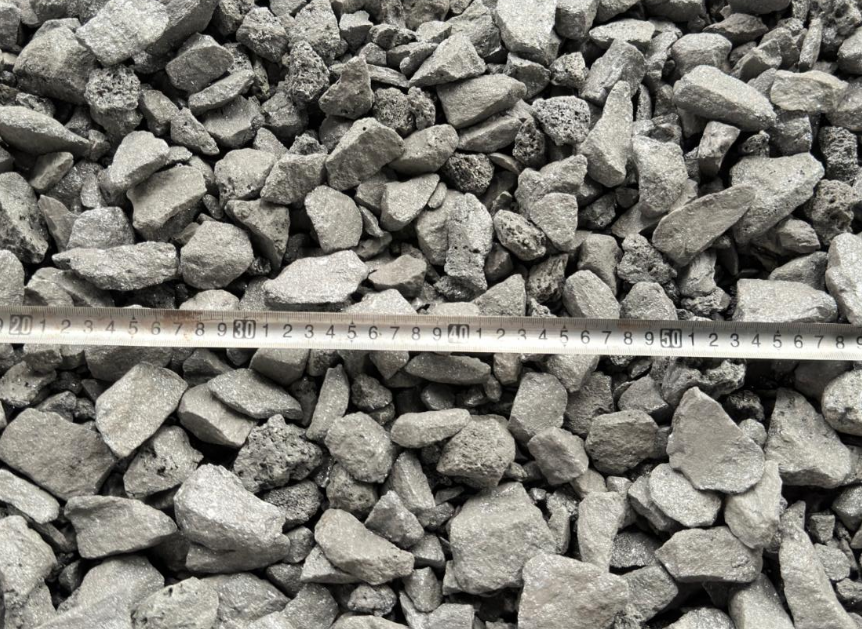
Silicon-carbon alloy is a silicon- and carbon-enriching material developed specifically for the ladle alloying stage. It is used to fine-tune the composition of molten steel, primarily addressing the issues of low absorption rates and poor reproducibility associated with conventional recarburizers when used in over-oxidized molten steel.
Issues with conventional recarburizers: Metallurgical and steel enterprises often employ ladle alloying to fine-tune steel composition during the smelting process. When molten steel is in an over-oxidized state, conventional recarburizers—due to their low density—tend to float on the surface; this results in low carbon absorption rates and poor reproducibility, thereby reducing the accuracy of hitting target carbon levels. Furthermore, because they fail to sink into the melt, the reaction interface is limited to the upper layer or surface of the steel, significantly lowering the carbon recovery rate.
Carbon-cored wire offers a solution but comes at a high cost: Some steelmakers use carbon-cored wire to mitigate these issues; however, this requires investment in specialized wire-feeding equipment, increases production costs, and complicates operational procedures.
The silicon-carbon alloy approach: This product is manufactured from high-purity carbon powder, silicon carbide powder, metallic silicon powder, and low-sulfur/low-nitrogen carbonaceous materials. It features high density and can be processed into spheres or powder according to customer specifications. It is added directly to the ladle during use, requiring no additional equipment.
Key physicochemical parameters:
| Grade / Designation | Si (%) | C (%) | Moisture (%) | granularity | form |
| 【Si-C 50/20】 | 45-65 | 10-25 | ≤ 2 |
0–10 mm 10-60 mm |
Powdery |
Packaging and Shipping:
|
project |
content |
|
Package |
Bulk bags with PE liners (or as agreed); small bags on pallets. |
|
Logo |
Each bag is marked with the product name, grade, batch number, net weight, and date of manufacture. |
|
store |
Store in a dry, well-ventilated warehouse; avoid storage with acids, alkalis, or strong oxidizing agents. |
|
Container loading |
Inspect and photograph empty containers before loading; do not exceed stacking limits; record seal numbers on the packing list. |
What We Offer:
Henan Longchuang Metallurgical Materials Co., Ltd. supplies over 20 types of products to steel mills and foundries, including rare-earth magnesium ferrosilicon alloys (nodulizers), inoculants, alloy cored wires, ferrosilicon, and manganese/chromium-based alloys.
About Silicon-Carbon Alloy:
Specifications—Supplied according to the composition and particle size agreed upon in the order; processing into granules or powder is available upon request.
Composition—Tested prior to shipment with a report included; composition is controlled within agreed ranges and is traceable by batch number. Non-compliant products are neither warehoused nor shipped, and batch mixing is strictly prohibited.
Packaging—Packed in lined bulk bags (ton bags) as agreed; each bag is marked with a batch number, and loading photos are provided.
Pricing—Base grade, adjustment rates, and settlement weight basis are clearly stated in the quotation; terms are not determined post-analysis.
Sampling & Retention—Joint sampling and sealing of retention samples occur during loading, documented by signatures and photographs; in the event of a dispute, re-testing of the sealed retention sample serves as the final authority.
Send us your target composition, monthly consumption volume, and destination port—we will reply with a quote and availability within [12 hours]. [MOQ and Sample Policy]
The main products include rare earth magnesium ferrosilicon alloy (spheroidizing agent), nucleating agent, pipe powder, ferrosilicon (particles), (high, medium and low) carbon manganese, (high, medium, low and micro) ferrochromium, alloy cored wire, silicon carbide, silicon nitride, slag onglomeration agent, desulfurizer, and carburant, as well as other customized alloy products.